We did everything right, and my five-year-old still ended up crying.
I'm Ryan King. By day I help CIOs and technology leaders design AI systems and the workflows around them, so I know in detail how modern software is built to capture attention and keep it. This past year I watched those same techniques, the ones tuned for grown-ups, handed to my two boys inside a friendly cartoon. This is the story of the afternoon a private frustration turned into a company.

The pixelated game
My eldest is five, and last winter he wanted nothing in the world more than to play that wildly popular pixelated building game. You know the one. There is a hit Jack Black movie named after it.
My husband and I both work in technology, so we did what tech parents do. We googled how to lock it down. The hostile mobs went off, the world went to its gentlest setting, and I read the forums on making it as safe and as calm as possible before handing it over. For a while he wandered a quiet world where nothing could come after him. We felt like the responsible people we had tried to be.
Then one afternoon he came apart. A full meltdown, down on the floor, sobbing. Through the tears it arrived in pieces. It rained too much in the game. There were too many pits and caves he kept falling into. He could not find the house he had built. He only wanted to play, and somehow playing had become too much.
Here is what was actually happening, translated out of five-year-old. The rain was never the real problem. He is too young to know that a game can stress him, so the stress came out as weather. Those pits and caves were a fine-motor problem, because his small hands could not yet steer the character clear of them. The missing house was a design problem, since that world is enormous and trackless, built with no paths a young brain can follow. Underneath all of it sat the simplest thing of all. A game engineered to keep even adults hooked had landed on a little nervous system with no defenses against it.
When the crying slowed, he asked me a question I have not stopped thinking about. Are there other video games? Ones that aren't that one?
He just wanted something he could actually play.
The honest answer was no, so I built one
I went looking for the yes. Something for a five-year-old that respected how a five-year-old actually works, calm on purpose, made by people who understood both the technology and the child. What I found instead was a shelf of apps that were louder, or that quietly sold his attention to advertisers, or that called themselves educational and taught almost nothing.
There was also a flight. A game we had downloaded refused to work over the Atlantic, then served the boys a thirty-second ad for a casino app the second we landed and the wifi came back. I closed it on the runway. By then I was already taking notes on the back of a customs form.
So I built the thing I could not buy. The first version came together in a few weeks, with both boys playtesting every level and telling me, with zero mercy, exactly what was boring.
Refuse: ads, in-app purchases, subscriptions, accounts, data collection, dark engagement loops, online dependencies that strand a kid offline, and claims about learning that the research does not back.
What "Cairn" means
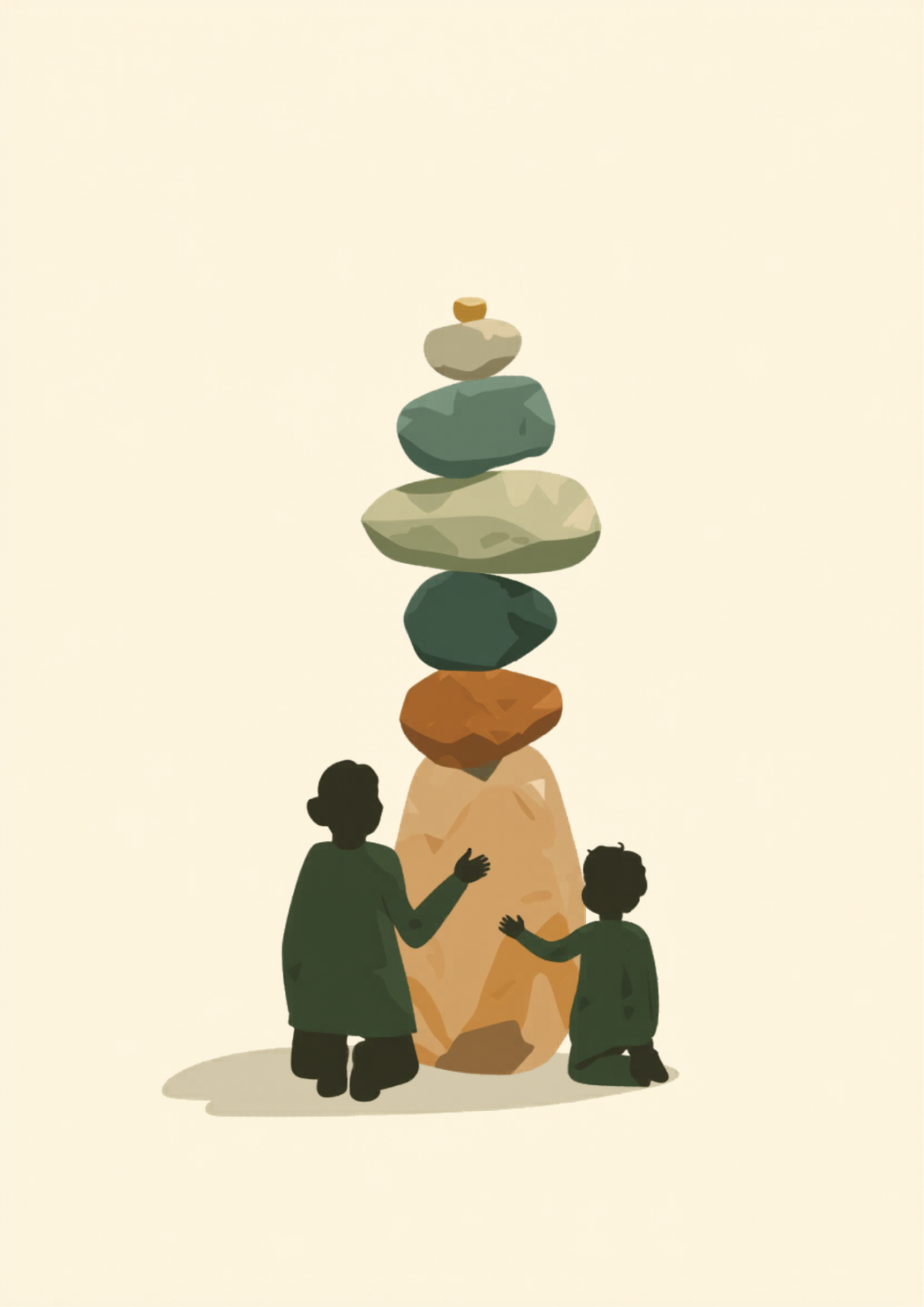
A cairn is the small stack of stones hikers build at trailheads to mark the path for the next walker. It is small, careful, made by hand, and put there so the next person knows the way. That felt like the right metaphor for a library of games made one at a time, in service of the parents who come after.
It also looks a lot like the stack of wooden alphabet blocks at the center of our first game. The brand mostly drew itself.
The first game
Cairn Read is a phonics adventure for ages 3 to 6, built on systematic synthetic phonics. That is the method that won the reading wars and that English primary schools are required to use. Letters arrive in the SATPIN order the research recommends, every sentence a child reads is fully decodable, and there is a picture comprehension check after every read. The boys playtested every version, every level, and every line of narration. No ads, no in-app purchases, and no data leaves the iPad it runs on.
Several more games are on the way, each mapped to a cognitive skill that early-childhood research has named for decades and that the assessments parents see still measure. The roadmap is here.
Who I am, the rest of it
By day I help CIOs and technology leaders design AI systems and the workflows around them. By night I am two small boys' favorite human and the one who reads the bedtime story. I have a STEM background, real fluency in how this technology actually works, and no patience left for products that aim grown-up persuasion tactics at children who cannot see them coming.
Cairn is what I wish my kids had been handed in the first place. If you have a small person in the house who has ever cried over a game that was simply too much, I think your kid deserves the answer to be yes.
Cairn Read is coming to the App Store.
A phonics adventure built on the research my kids' future teachers would name. $3.99 once, no ads, no subscription, nothing collected, fully offline. We will post the link the day it lands.
See Cairn ReadPress inquiries and review copies: hello@playcairn.com. Press kit: /press.html.