Cairn Memory™
Age 3Age 4Age 5Age 6
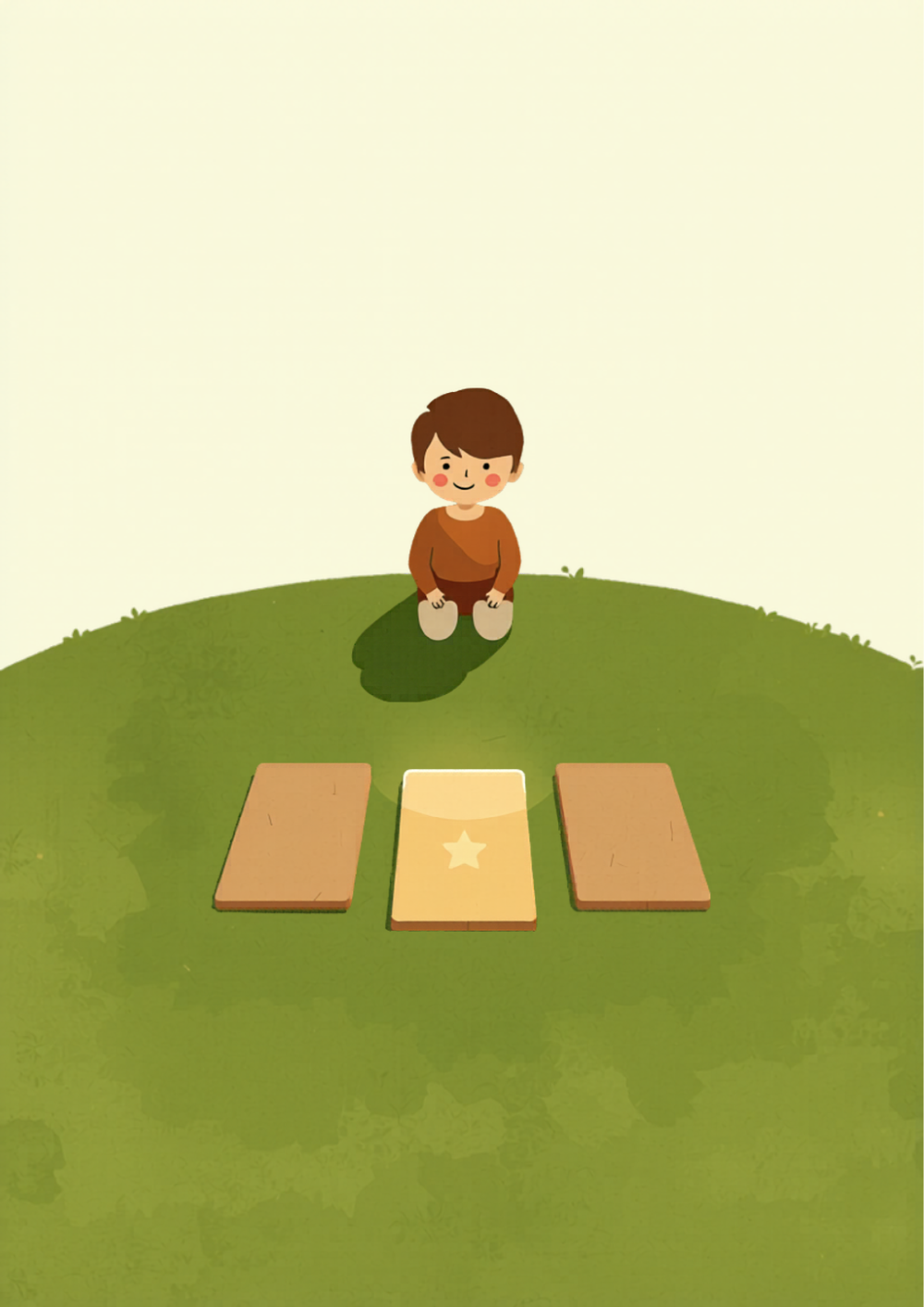
Remember-and-find games that gently stretch how much a little mind can hold at once.
The science
Working memory is the small amount of information a child can hold and use in the moment. It is the workspace behind following a two-step instruction, sounding out a word without losing the first sound, or keeping a number in mind while you count on. Cairn Memory trains it with remember-then-find games that grow with the child.
Baddeley's model splits working memory into a visual-spatial sketchpad and a verbal loop, both managed by a central control system. Young children's spans are short and grow steadily across these years, and that growth predicts later reading and math more strongly than almost anything else we can measure early.
The skill maps directly onto the kind of tasks the WPPSI assessment uses (Picture Memory, Zoo Locations), but we are building the muscle, not coaching the test.
Crucially, working memory improves with the right kind of practice: short, playful, and just past comfortable, then backed off when it gets frustrating. Calm by design is not a slogan here, it is how memory actually consolidates.
- Baddeley's working-memory model
- Cowan on memory span in childhood
- WPPSI-IV working-memory subtests
By age, and how to do it at home
Here is what is developing at each age, what Cairn Memory does about it, and a way to build the same skill at home. The home column is the real point: even if your child never opens the app, you can do this. The best early learning has always been a parent and a child and a little knowing-what-to-try.
Holds one or two things in mind, and loves finding something hidden a moment ago.
Two-card matches, things that hide and reappear, very short remember-and-find.
Peekaboo grown up: hide a toy under one of two cups and let them find it.
Follows a two-step instruction and remembers a short list with a little help.
Three- and four-card matching, simple “where was it” grids.
Give two-step jobs: “put the cup in the sink, then bring me your shoes.”
Holds several items and starts to rehearse them to remember, the first sign of a strategy.
Longer match grids, short sequences to repeat back, find-what-changed puzzles.
Play “I went to the shop and bought...” adding one item each turn.
Juggles a few pieces of information at once and updates them as things change.
Sequences to remember and reorder, and remember-while-you-do-something-else challenges.
Card games like Memory and Go Fish. Real cards, real turn-taking, real memory.
In the workshop.
This game is on the bench, built one at a time and only shipped when it clears all six of our promises. The science and the at-home guide above work today, with or without the app. Want to know when it lands? hello@playcairn.com.
See the whole libraryThe pedagogy behind every Cairn game is written in plain language and cited. Questions, or a researcher who wants to argue with us? hello@playcairn.com.